

Key Takeaways:
- AI/ML can spot anomalies in backup behavior and data-change patterns that may indicate ransomware or misuse earlier than manual review.
- Automation can speed triage and response, helping teams prioritize what to investigate and recover first.
- Predictive insights improve reliability, such as forecasting capacity needs and highlighting backup job failure trends before they become outages.
- AI works best when paired with cyber resilience fundamentals: Immutable backups, clean recovery points, and regular restore testing.
- Good inputs matter. Strong logging, clear access controls, and well-governed backup infrastructure reduce false positives and unsafe automation.
AI data protection has become a critical component of any organization’s cybersecurity strategy. As cyberthreats evolve, so must the tools and technologies we use to safeguard sensitive information. AI is at the forefront of this transformation, providing advanced capabilities that enhance data protection and ensure data integrity. This blog explores how AI is revolutionizing data protection, and highlights the benefits, innovations, and best practices for leveraging AI in cybersecurity.
What is AI Data Protection?
AI data protection (also called AI-powered data protection) is the use of AI and machine learning to improve how organizations back up, detect threats, and recover data. Common capabilities include anomaly detection (e.g., spotting unusual backup or data change patterns), predictive analytics (e.g., anticipating failures), and automated response (e.g., speeding up containment and recovery). It complements, rather than replaces, core backup and cyber resilience best practices.
The Role of AI in Data Protection
The increasing frequency and sophistication of cyberattacks have made traditional data protection methods insufficient. Organizations need advanced solutions to identify, mitigate, and prevent these newer threats. AI offers a strategic advantage in this arena, providing tools that can analyze vast amounts of data, detect anomalies, and respond to incidents more efficiently than human operators.
Reduction in Detection Time: According to a report by the Enterprise Strategy Group (ESG), AI-driven security solutions can detect threats significantly faster than traditional methods, thereby reducing the time that cyberthreats remain unnoticed within a network. This rapid detection is crucial in minimizing damage and preventing data breaches.
Improved Threat Identification: The same report found that over 90% of organizations believe AI and machine learning are important or critical to their data backup, data recovery, and ransomware recovery efforts. AI’s ability to quickly identify and address potential threats enhances overall cybersecurity resilience (Source: ESG, “Reinventing Backup and Recovery with AI and ML”).
AI-Driven Innovations in Data Protection
AI and ML technologies have introduced several innovations in data protection that enhance security and improve operational efficiency. Here are some key AI-driven innovations:
| AI-Powered Anomaly Detection | AI systems can analyze network traffic and user behavior to detect unusual patterns that may indicate a cyberthreat. By continuously monitoring data and learning from it, these systems can identify anomalies in real-time, allowing for swift action. |
| Predictive Analytics | Machine learning algorithms can predict potential threats by analyzing historical data and identifying patterns. This predictive capability enables organizations to proactively address vulnerabilities before they can be exploited. |
| Automated Response | AI-driven security systems can automatically respond to detected threats. This automation reduces the time needed to contain and mitigate cyber incidents, thus minimizing potential damage. For example, an AI system might automatically isolate an infected device from the network to prevent the spread of malware. |
| Data Masking and Encryption | AI can enhance data protection through advanced masking and encryption techniques. These methods ensure that sensitive information remains secure, even if it is intercepted by malicious actors. |
What Are the Practical Benefits of AI-Driven Data Protection
The integration of AI in data protection offers several practical benefits for organizations:
- Reduced Downtime and Faster Recovery: AI’s ability to detect and respond to threats quickly reduces downtime during cyber incidents. This rapid response ensures that business operations can resume with minimal disruption. AI can also streamline the data recovery process, making it faster and more efficient.
- Cost Savings: By preventing extensive damage and reducing recovery times, AI-driven data protection can lead to significant cost savings. Organizations can avoid the high costs associated with data breaches, such as regulatory fines, legal fees, and loss of customer trust.
- Enhanced Data Security: AI enhances overall data security by providing continuous monitoring and advanced threat detection capabilities. This comprehensive approach ensures that sensitive information is protected from a wide range of cyberthreats.
- Improved Compliance: AI can help organizations meet regulatory requirements by ensuring that data protection measures are consistently applied. Automated compliance checks and reporting make it easier to adhere to industry standards and regulations.
Five Best Practices for Implementing AI in Data Protection
To effectively leverage AI in data protection, organizations should follow these best practices:
- Continuous monitoring and improvement: AI systems should be continuously monitored and updated to ensure they remain effective against evolving threats. Regularly reviewing and refining AI algorithms can enhance their accuracy and efficiency.
- Selecting the right AI tools: Choosing the right AI tools and solutions is crucial for successful implementation. Organizations should evaluate AI technologies based on their specific needs and the types of threats they are likely to face
- Integration with existing systems: AI-driven data protection solutions should be seamlessly integrated with existing cybersecurity infrastructure. This integration ensures that AI can complement and enhance current security measures rather than operate in isolation.
- Training and awareness: Staff training and awareness programs are essential to maximize the benefits of AI in data protection. Employees should be trained on how to use AI tools effectively and understand their role in the organization’s overall cybersecurity strategy.
- Scalability: AI solutions should be scalable to accommodate the growing volume of data and the increasing complexity of cyberthreats. Scalable AI systems can adapt to changing needs and ensure long-term protection.
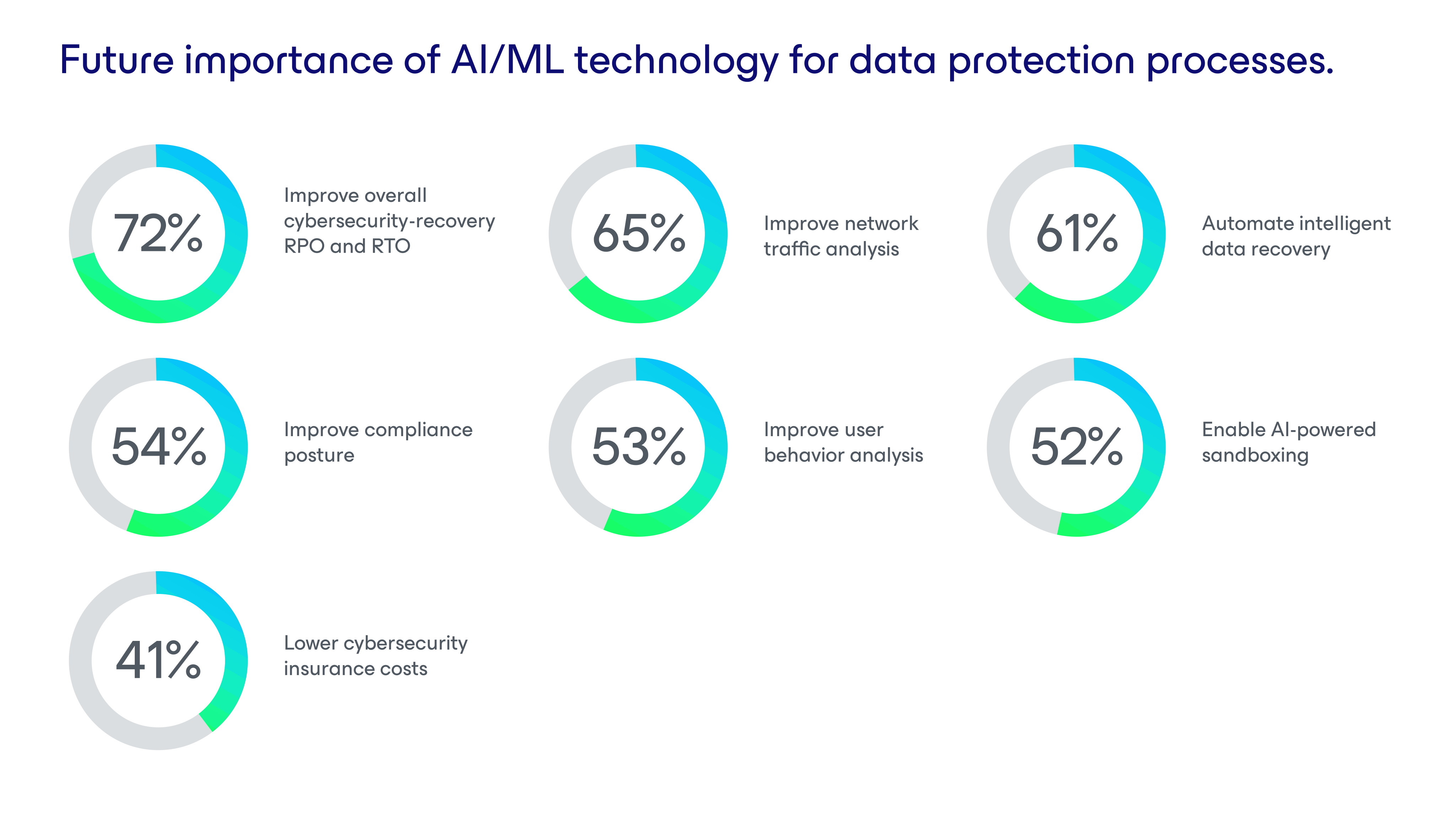
AI is transforming the landscape of data protection by providing advanced capabilities that enhance cybersecurity and ensure data integrity. By leveraging AI-driven innovations such as anomaly detection, predictive analytics, and automated response, organizations can significantly improve their data protection strategies. The practical benefits of AI in data protection, including reduced downtime, cost savings, enhanced security, and improved compliance, make it a valuable asset in the fight against cyberthreats.
To fully realize the potential of AI in data protection, organizations should follow best practices such as continuous monitoring, selecting the right tools, integrating with existing systems, and ensuring staff training. By doing so, they can stay ahead of cyberthreats and protect their valuable data assets effectively.
For more insights into how AI can revolutionize your data protection strategy, download our whitepaper on AI in Data Protection and sign up for a free trial of the Veeam Data Platform to experience AI-driven data protection firsthand.
FAQs:
No. AI enhances data protection, but it doesn’t replace proven backup and recovery controls. AI can miss signals, produce false positives, or be constrained by incomplete telemetry; and ransomware operators still target backup systems directly. Your ability to recover ultimately depends on having reliable, protected recovery points and a recovery process you’ve validated.
AI can baseline “normal” backup behavior (e.g., ob success rates, data change rates, file patterns, access activity) and flag anomalies that may indicate ransomware or malicious activity. This helps teams investigate faster and prioritize recovery before damage spreads.
AI can produce false positives/negatives and is only as effective as the telemetry and data quality it learns from. Automated actions also introduce risk, so AI should be paired with guardrails (e.g., least privilege, approval steps for sensitive actions, and regular recovery testing).
