


FAQs
1. What is supply chain risk management?
Supply chain risk management is the practice of identifying, assessing, and mitigating risks that could disrupt the flow of goods, services, or data across an organization’s supplier network, including operational, financial, and cybersecurity threats.
2. Why is supply chain risk management important for businesses today?
It’s critical because cyberattacks increasingly target vendors and service providers to infiltrate multiple organizations at once, making third‑party security weaknesses a major business risk.
3. What are the most common supply chain cyber risks?
Common risks include compromised software updates, insecure vendor access, ransomware via third‑party tools, data leaks from partners, and exploitation of unmanaged cloud services.
4. How does Veeam help strengthen supply chain resilience?
Veeam strengthens resilience with immutable backups, rapid recovery, and secure data protection across hybrid and multicloud environments. This includes the best threat detection capabilities for data resilience platforms in the market.
5. How is supply chain risk management different from general cybersecurity?
General cybersecurity focuses on internal systems and networks, while supply chain risk management extends protections to external vendors, partners, and third‑party dependencies that can impact your operations.
6. Can Veeam integrate with my existing risk management strategy?
Yes. Veeam integrates seamlessly with existing risk management frameworks, providing cross‑platform backup, recovery, and compliance reporting to enhance your overall security posture.
FAQs
1. What is supply chain risk management?
Supply chain risk management is the practice of identifying, assessing, and mitigating risks that could disrupt the flow of goods, services, or data across an organization’s supplier network, including operational, financial, and cybersecurity threats.
2. Why is supply chain risk management important for businesses today?
It’s critical because cyberattacks increasingly target vendors and service providers to infiltrate multiple organizations at once, making third‑party security weaknesses a major business risk.
3. What are the most common supply chain cyber risks?
Common risks include compromised software updates, insecure vendor access, ransomware via third‑party tools, data leaks from partners, and exploitation of unmanaged cloud services.
4. How does Veeam help strengthen supply chain resilience?
Veeam strengthens resilience with immutable backups, rapid recovery, and secure data protection across hybrid and multicloud environments. This includes the best threat detection capabilities for data resilience platforms in the market.
5. How is supply chain risk management different from general cybersecurity?
General cybersecurity focuses on internal systems and networks, while supply chain risk management extends protections to external vendors, partners, and third‑party dependencies that can impact your operations.
6. Can Veeam integrate with my existing risk management strategy?
Yes. Veeam integrates seamlessly with existing risk management frameworks, providing cross‑platform backup, recovery, and compliance reporting to enhance your overall security posture.
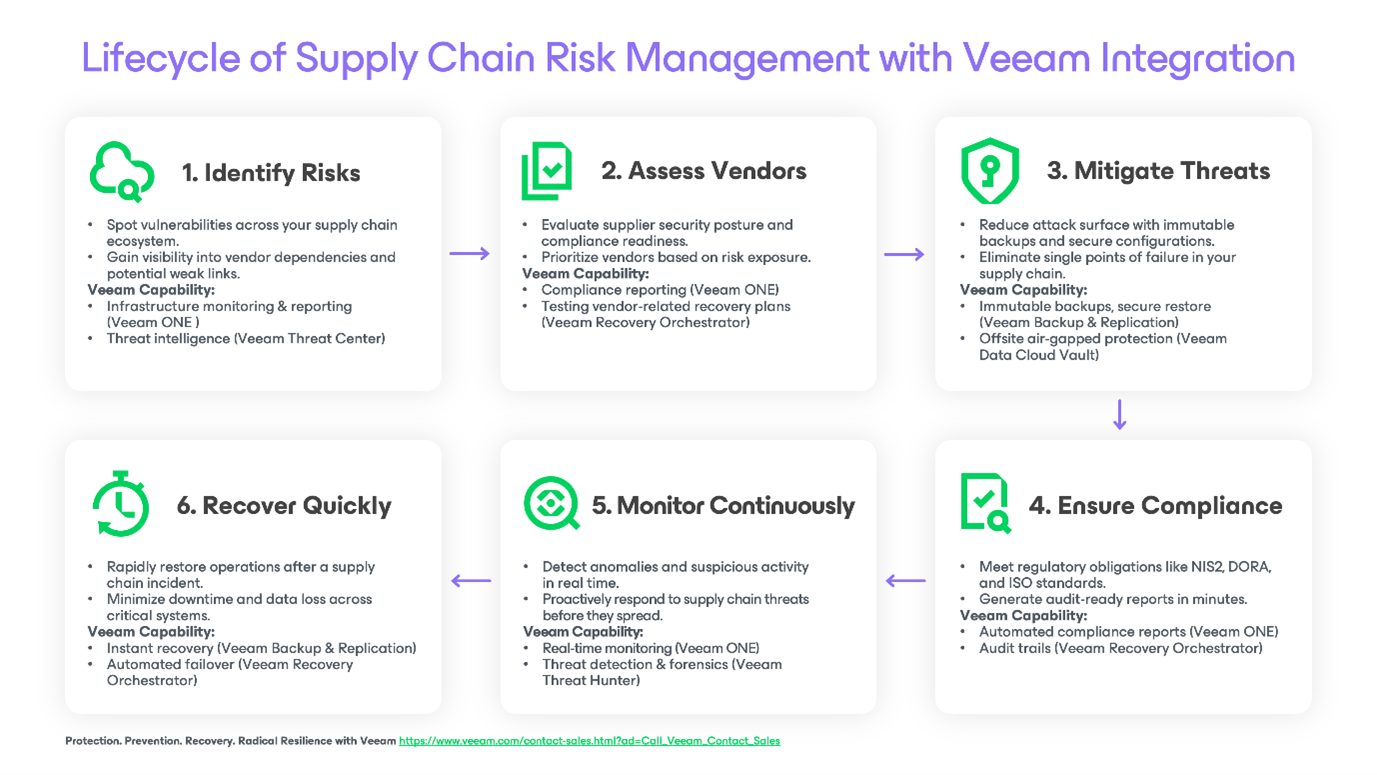
FAQs
1. What is supply chain risk management?
Supply chain risk management is the practice of identifying, assessing, and mitigating risks that could disrupt the flow of goods, services, or data across an organization’s supplier network, including operational, financial, and cybersecurity threats.
2. Why is supply chain risk management important for businesses today?
It’s critical because cyberattacks increasingly target vendors and service providers to infiltrate multiple organizations at once, making third‑party security weaknesses a major business risk.
3. What are the most common supply chain cyber risks?
Common risks include compromised software updates, insecure vendor access, ransomware via third‑party tools, data leaks from partners, and exploitation of unmanaged cloud services.
4. How does Veeam help strengthen supply chain resilience?
Veeam strengthens resilience with immutable backups, rapid recovery, and secure data protection across hybrid and multicloud environments. This includes the best threat detection capabilities for data resilience platforms in the market.
5. How is supply chain risk management different from general cybersecurity?
General cybersecurity focuses on internal systems and networks, while supply chain risk management extends protections to external vendors, partners, and third‑party dependencies that can impact your operations.
6. Can Veeam integrate with my existing risk management strategy?
Yes. Veeam integrates seamlessly with existing risk management frameworks, providing cross‑platform backup, recovery, and compliance reporting to enhance your overall security posture.
FAQs
1. What is supply chain risk management?
Supply chain risk management is the practice of identifying, assessing, and mitigating risks that could disrupt the flow of goods, services, or data across an organization’s supplier network, including operational, financial, and cybersecurity threats.
2. Why is supply chain risk management important for businesses today?
It’s critical because cyberattacks increasingly target vendors and service providers to infiltrate multiple organizations at once, making third‑party security weaknesses a major business risk.
3. What are the most common supply chain cyber risks?
Common risks include compromised software updates, insecure vendor access, ransomware via third‑party tools, data leaks from partners, and exploitation of unmanaged cloud services.
4. How does Veeam help strengthen supply chain resilience?
Veeam strengthens resilience with immutable backups, rapid recovery, and secure data protection across hybrid and multicloud environments. This includes the best threat detection capabilities for data resilience platforms in the market.
5. How is supply chain risk management different from general cybersecurity?
General cybersecurity focuses on internal systems and networks, while supply chain risk management extends protections to external vendors, partners, and third‑party dependencies that can impact your operations.
6. Can Veeam integrate with my existing risk management strategy?
Yes. Veeam integrates seamlessly with existing risk management frameworks, providing cross‑platform backup, recovery, and compliance reporting to enhance your overall security posture.
FAQs
Supply chain risk management is the practice of identifying, assessing, and mitigating risks that could disrupt the flow of goods, services, or data across an organization’s supplier network, including operational, financial, and cybersecurity threats.
It’s critical because cyberattacks increasingly target vendors and service providers to infiltrate multiple organizations at once, making third‑party security weaknesses a major business risk.
Common risks include compromised software updates, insecure vendor access, ransomware via third‑party tools, data leaks from partners, and exploitation of unmanaged cloud services.
Veeam strengthens resilience with immutable backups, rapid recovery, and secure data protection across hybrid and multicloud environments. This includes the best threat detection capabilities for data resilience platforms in the market.
General cybersecurity focuses on internal systems and networks, while supply chain risk management extends protections to external vendors, partners, and third‑party dependencies that can impact your operations.
Yes. Veeam integrates seamlessly with existing risk management frameworks, providing cross‑platform backup, recovery, and compliance reporting to enhance your overall security posture.
